4 - Technology
The Evolution of Music Players
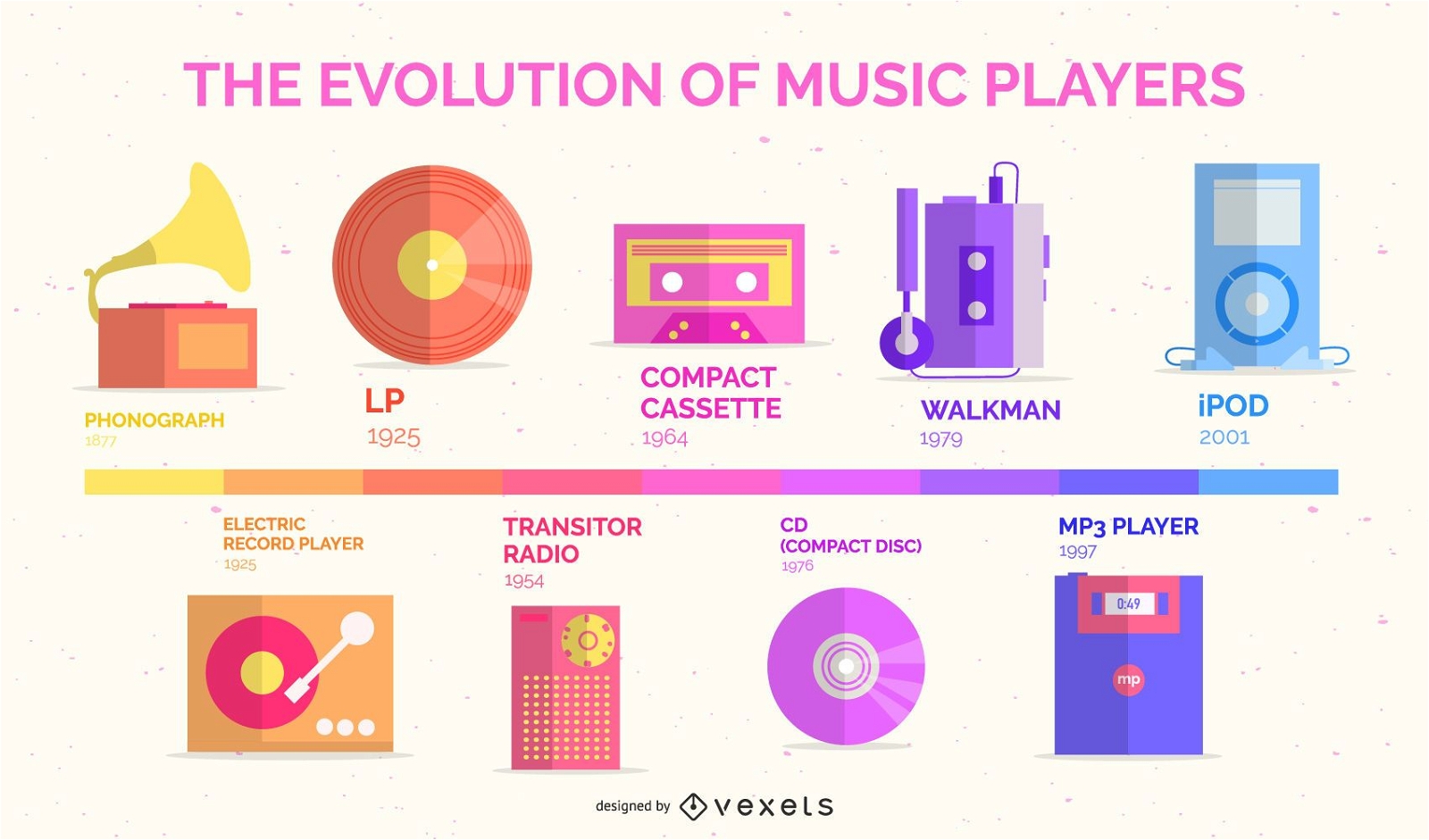
The history of music players dates back to the late 19th century with the invention of the phonograph by Thomas Edison in 1877. This device used a rotating cylinder wrapped in tin foil to record and reproduce sound. Edison's phonograph was groundbreaking, as it allowed music and speech to be played back for the first time. However, the sound quality was poor, and the device was cumbersome. A significant improvement came in the 1880s when Emile Berliner developed the gramophone, which used flat discs instead of cylinders. The gramophone's records were easier to mass-produce and store, making it a more practical choice for commercial music distribution.

As the 20th century progressed, the music industry saw further advancements with the introduction of vinyl records in the 1940s. Vinyl records provided superior sound quality and durability compared to earlier shellac records. The development of the turntable and high-fidelity (hi-fi) sound systems in the 1950s and 1960s allowed listeners to enjoy music with enhanced clarity. During this era, vinyl records became the dominant format, and record players were common household items.
The late 20th century saw a shift toward more portable music players. In 1963, Philips introduced the compact cassette tape, which revolutionized personal music consumption. Cassette tapes were smaller, more durable, and allowed users to record their own music. This innovation led to the rise of portable cassette players, most notably the Sony Walkman, which debuted in 1979. The Walkman allowed users to take their music anywhere, ushering in an era of personal and private listening experiences.
The 1980s and 1990s brought the advent of digital technology, leading to the development of compact discs (CDs). Introduced in 1982 by Sony and Philips, CDs offered superior sound quality, longer playback time, and greater durability than cassette tapes. CD players became widespread, both in homes and in portable forms like the Sony Discman. The CD era also saw the rise of digital recording and playback, setting the stage for the transition to digital formats.
The early 2000s marked a dramatic shift with the rise of MP3 players and digital downloads. The most iconic of these devices was the Apple iPod, released in 2001. MP3 players allowed users to store thousands of songs on a single device, making CDs and tapes obsolete. The convenience of digital music files led to the decline of physical media.
In the modern era, music streaming services such as Spotify, Apple Music, and YouTube have taken center stage. These platforms provide instant access to millions of songs without the need for physical media or downloads. Music players have evolved from bulky machines to sleek, internet-connected devices, reflecting society’s demand for convenience and accessibility. The history of music players showcases how technology continues to shape the way people experience and enjoy music.

Comments
Post a Comment